
2026 Is the Year AI Becomes Your Coworker, Not Your Tool
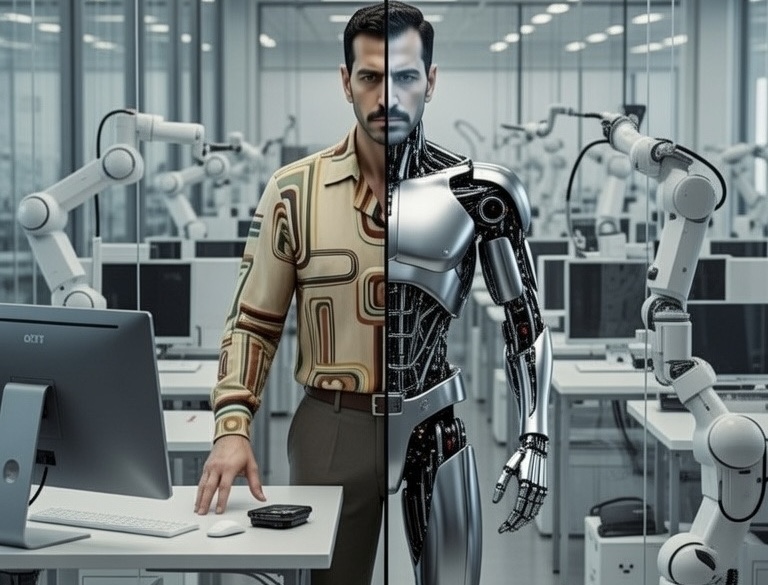
If 2023–2025 were the hype years for generative AI, 2026 is the year it quietly moves into your org chart. Agentic AI systems are shifting from “smart autocomplete” to always-on digital coworkers embedded inside the tools knowledge workers already live in. Workflows that used to span four tools, three teams, and twelve Slack threads are now orchestrated by AI agents that can plan, act, and adapt in real time.
Enterprise adoption numbers reflect this shift. CRM and productivity vendors expect AI agents to be embedded in the majority of workplace apps by 2026, with some analyses projecting that agents will handle a meaningful slice of work decisions autonomously within just a few years. Cisco describes these “digital workers” as integrated team members that surface insights, automate workflows, and keep projects moving without interrupting human judgment. Kore.ai reports that “ask AI first” is becoming the default behavior: people go to AI before pinging a colleague or hunting through internal wikis.
The result is a subtle but profound redefinition of expertise. When information is always available and AI handles legwork, influence shifts from people who “know where things are” to people who can ask better questions, frame problems, and apply judgment to AI-generated options. AI agents can research, summarize, and propose scenarios; humans decide what aligns with strategy, ethics, and brand.kore+2
For designers, PMs, and engineers, this means the baseline expectation for productivity is rising. Marketing agents draft campaigns and analyze engagement. Sales agents triage leads and forecast revenue. Support agents orchestrate multi-channel customer journeys. None of this replaces humans outright, but it absolutely changes what “average performance” looks like inside a modern team. tibicle+1
So how do you adapt without burning out?
- Treat AI as a system you design around, not a feature you occasionally click. Map your daily work into repeatable patterns and deliberately assign low-value steps to agents.
- Get good at prompts and constraints, not just tools. The professionals who thrive are the ones who can define success criteria clearly enough that an agent can execute, test, and iterate
- Double down on uniquely human skills: stakeholder management, ethics, facilitation, and cross-functional alignment. Agentic systems need humans who can resolve tradeoffs and interpret impact, not just approve outputs.
2026 is not the year your job disappears; it’s the year your job unbundles. The tactical parts of your role get automated first. The value you create shifts up the stack into orchestration, decision-making, and narrative—connecting what AI can do with what your organization should do. If you lean into that shift now, you won’t just be “AI-proofing” your career; you’ll be designing the future of your own job.
Exploring how emerging technologies—AI-driven design tools, human-centered interfaces, adaptive systems, and data-informed creativity—are reshaping how people experience products, platforms, and brands.
We publish deeply-researched stories, actionable insights, and design critiques that help practitioners build smarter, more intuitive experiences. Whether it’s decoding the ethics of generative UX, experimenting with adaptive design systems, or unpacking the next wave of human–AI collaboration, our articles aim to illuminate what’s next in the practice of design and technology.
-
2026 Is the Year AI Becomes Your Coworker, Not Your Tool
2026 Is the Year AI Becomes Your Coworker, Not Your Tool If 2023–2025 were the hype years for generative AI, 2026 is the year it quietly moves into your org chart. Agentic AI systems are shifting from “smart autocomplete” to always-on digital coworkers…
-

The Future of Intelligent Chatbots in Business
This paragraph serves as an introduction to your blog post. Begin by discussing the primary theme or topic that you plan to cover, ensuring it captures the reader’s interest from the very first sentence. Share a brief overview that highlights why this topic…

Leave a Reply